

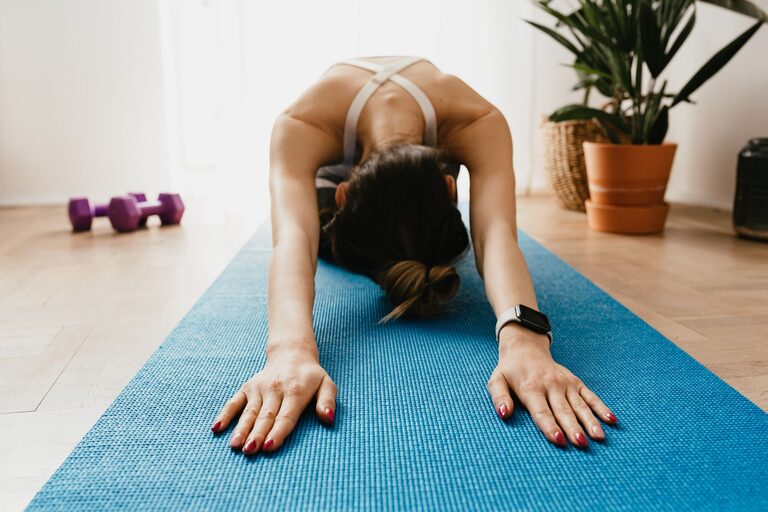
Stretching is a simple way to add movement to your day. It requires little space, no special equipment, and only a few minutes at a time. Whether you spend much of the day sitting, want to move more comfortably, or are beginning a new fitness routine, regular stretching can be a useful habit.
This beginner’s guide explains how to stretch at home, which stretches to try, and how to create a routine that feels manageable. The goal is not to force your body into extreme positions. Instead, focus on calm, controlled movement and gradual progress.
What Is Stretching?
Stretching involves moving your muscles and joints through a comfortable range of motion. Some stretches are held in one position, while others use slow, gentle movement.
The two most common types are:
– Static stretching: Holding a position for a set amount of time.
– Dynamic stretching: Moving smoothly through a range of motion without holding one position for long.
Both types can have a place in a home routine. Dynamic movements are often useful before activity, while static stretches can work well after exercise or during a separate flexibility session.
Why Stretch at Home?
A home stretching routine can offer several practical benefits:
– It encourages regular movement during the day.
– It can help you feel less stiff after sitting or traveling.
– It supports flexibility and comfortable movement.
– It provides a calm break from work or screen time.
– It can complement other forms of exercise.
Stretching does not need to be intense or time-consuming. A five-minute session may be easier to maintain than a long routine you rarely complete. Consistency matters more than trying to do everything at once.
How to Prepare for Stretching
You can stretch in a living room, bedroom, home office, or any clear area. A yoga mat is helpful but not required. A carpet, folded blanket, or firm towel can provide extra comfort for floor-based stretches.
Before you begin:
- Choose a space where you can move without bumping into furniture.
- Wear comfortable clothing that allows free movement.
- Remove distractions when possible.
- Take a few relaxed breaths.
- Start with gentle movements instead of moving directly into a deep stretch.
If your body feels cold or stiff, spend two to five minutes walking around the room, marching slowly in place, or moving your arms in easy circles. This helps you transition into your routine.
Basic Stretching Principles
Good technique is more important than reaching a deep position. Keep these guidelines in mind:
Move Slowly
Avoid bouncing, jerking, or quickly forcing a joint into position. Move in a controlled way and give your body time to adjust.
Use Gentle Tension
A stretch should usually feel like mild tension, not sharp pain. Ease off if the sensation becomes painful, intense, or uncomfortable.
Breathe Normally
Try not to hold your breath. Breathe slowly and evenly, using each exhale as a reminder to relax your shoulders and jaw.
Keep Your Body Supported
Use a wall, chair, or countertop for balance when needed. Stability allows you to focus on the stretch instead of trying to avoid falling.
Stretch Both Sides
When a movement targets one side of the body, repeat it on the other side. This keeps your routine balanced and helps you notice differences in comfort or mobility.
Simple Stretches for Beginners
The following exercises are easy to perform at home. Hold static stretches for about 15 to 30 seconds, and repeat each one one or two times. Use a shorter hold if you are new to stretching.
Neck and Shoulder Stretch
Sit or stand tall with your shoulders relaxed. Slowly tilt your right ear toward your right shoulder without lifting the shoulder. Hold gently, then return to the center and repeat on the left side.
For the shoulders, roll them slowly backward several times, then forward. Keep the movement relaxed and avoid making large, uncomfortable circles.
Upper Back Stretch
Stand or sit with your hands extended in front of you. Interlace your fingers and gently press your palms away from your body while rounding your upper back. Let your head remain in a comfortable position rather than dropping it forcefully.
This is a useful option after reading, typing, or spending time at a desk.
Chest Stretch
Stand beside a wall or doorway. Place one forearm against the surface with your elbow roughly at shoulder height. Slowly turn your body away until you feel a gentle stretch across your chest. Repeat on the other side.
Keep the movement small at first. You do not need to twist far to feel the stretch.
Standing Side Stretch
Stand with your feet about hip-width apart. Raise your right arm overhead and slowly lean to the left. Keep both feet grounded and avoid twisting your torso. Return to the center and repeat on the other side.
This stretch should feel smooth along the side of your body.
Standing Front Thigh Stretch
Use a wall or chair for balance. Bend one knee and bring your heel toward your seat. Hold your ankle or the lower part of your leg if you can do so comfortably. Keep your knees close together and your torso upright.
If reaching your foot feels difficult, skip this stretch or use a different position that feels more stable.
Hamstring Stretch
Sit near the edge of a sturdy chair with one leg extended and the heel resting on the floor. Keep your back relatively straight and gently lean forward from your hips. Stop when you feel light tension along the back of your extended leg.
Avoid rounding forward aggressively or trying to touch your toes.
Calf Stretch
Face a wall and place both hands against it. Step one foot back, keeping the heel on the floor and the toes pointing forward. Bend the front knee slightly and lean toward the wall. Switch sides after holding the position.
Adjust the distance between your feet to change the intensity.
Hip Stretch
Sit on a chair with both feet on the floor. Place your right ankle over your left thigh. Keeping your back comfortable and upright, lean forward slightly until you feel a gentle stretch around the outside of your hip. Repeat on the other side.
If this position feels uncomfortable, keep both feet on the floor and try a simple seated knee lift instead.
A Five-Minute Home Routine
For a quick daily session, try this sequence:
- Shoulder rolls for 30 seconds.
- Neck tilts for 30 seconds on each side.
- Standing side stretches for 30 seconds on each side.
- Chest stretch for 30 seconds on each side.
- Hamstring stretch for 30 seconds on each side.
- Calf stretch for 30 seconds on each side.
- One minute of relaxed walking or breathing.
Move at an easy pace and shorten the holds whenever necessary. As the routine becomes familiar, you can add more time or include additional stretches.
Common Mistakes to Avoid
Beginners often make stretching harder than it needs to be. Try to avoid these common habits:
– Stretching too aggressively: More intensity does not always mean better results.
– Bouncing: Fast, springy movements can make it harder to stay in control.
– Ignoring posture: Poor alignment can place unnecessary strain on other areas.
– Holding your breath: Relaxed breathing helps you stay calm and attentive.
– Comparing yourself with others: Flexibility varies widely from person to person.
– Doing too much too soon: A short, regular routine is easier to maintain.
How to Make Stretching a Habit
Attach stretching to an activity you already do. You might stretch after brushing your teeth, during a work break, after a walk, or while waiting for water to boil.
Keep your routine simple and choose a regular time of day. Setting a reminder or leaving a mat in a visible location can also help. Track how often you stretch if you enjoy seeing your progress, but do not feel pressured to reach a specific flexibility goal.
Stop if you experience sharp pain, sudden discomfort, dizziness, or unusual symptoms. If you have an injury or a condition that affects movement, consider asking a qualified professional which activities are appropriate for you.
The best stretching routine is one you can perform comfortably and consistently. Start with a few gentle movements, pay attention to how your body feels, and build from there.